From Ancient Rituals to Modern Zen Masterpieces
ntroduction: The Soul of the Earth
In a world saturated with fleeting trends and mass-produced decor, there exists an art form that demands silence and respect. It is the art of Black Pottery—a craft born from earth and fire over 4,000 years ago. Often referred to as the “Dark Alchemy of the Orient,” black pottery is not merely ceramic; it is a testament to human patience and the pursuit of perfection. At Fradell, we are proud to bring this ancient heritage into the modern sanctuary of your home.
The Neolithic Roots: The Longshan Culture
The story of black pottery begins in the Neolithic period, specifically within the Longshan Culture (circa 2500–2000 BC) along the Yellow River. Unlike the painted pottery that preceded it, Longshan artisans focused on form and texture. They mastered the “reduction firing” technique, where carbon is infused into the clay at intense temperatures, creating a surface as deep and lustrous as polished obsidian.
In ancient times, these vessels were not common household items. They were ritualistic treasures, used by kings and shamans to connect with the divine. To own a piece of black pottery was to hold a symbol of status, wisdom, and spiritual protection.
The Secret of the “Midnight Hue”
What makes black pottery truly unique is that its color is not a glaze. It is the result of a rigorous, multi-day process:
- Pure Sourcing: Artisans select fine-grained clay from ancient riverbeds, washing it repeatedly to remove any impurities.
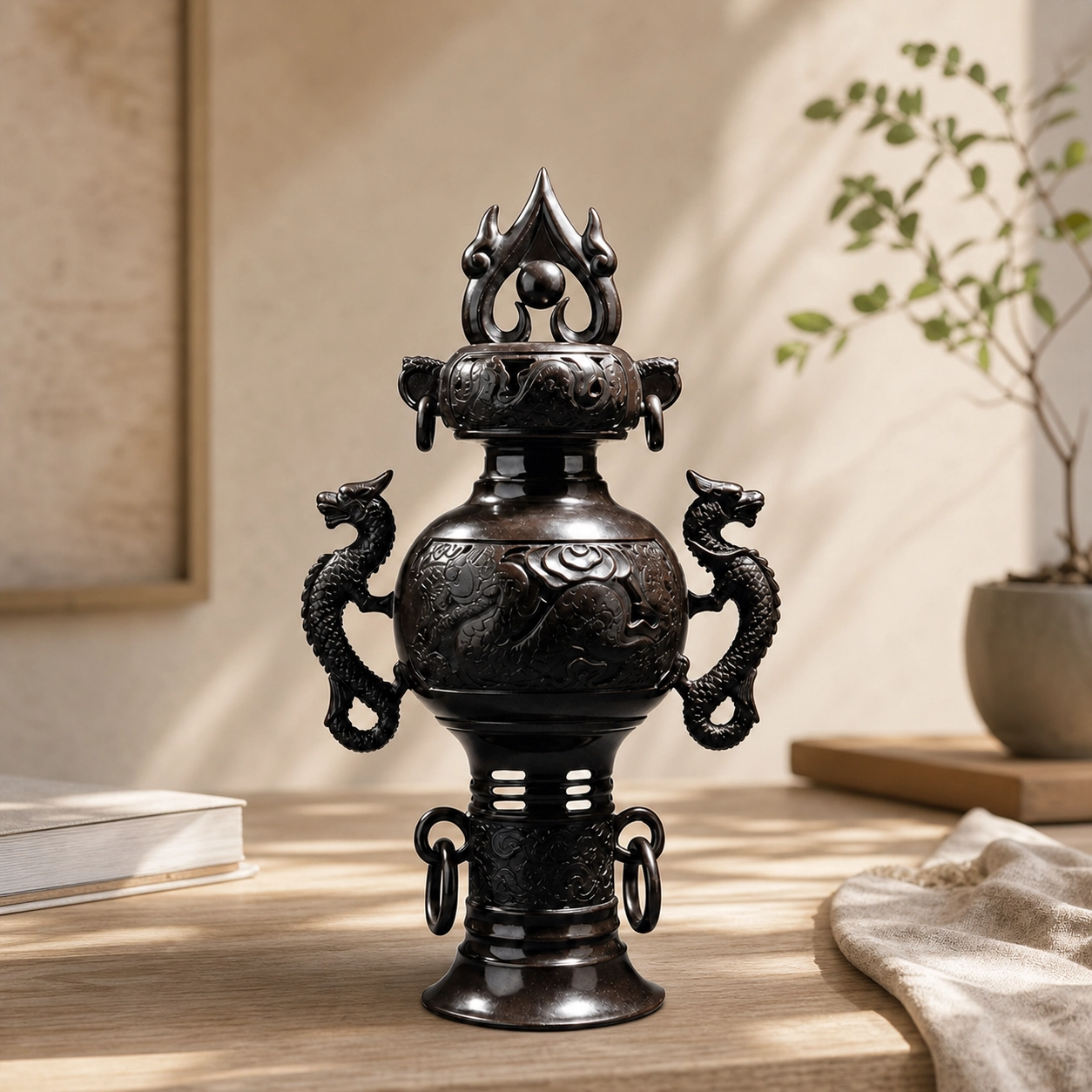
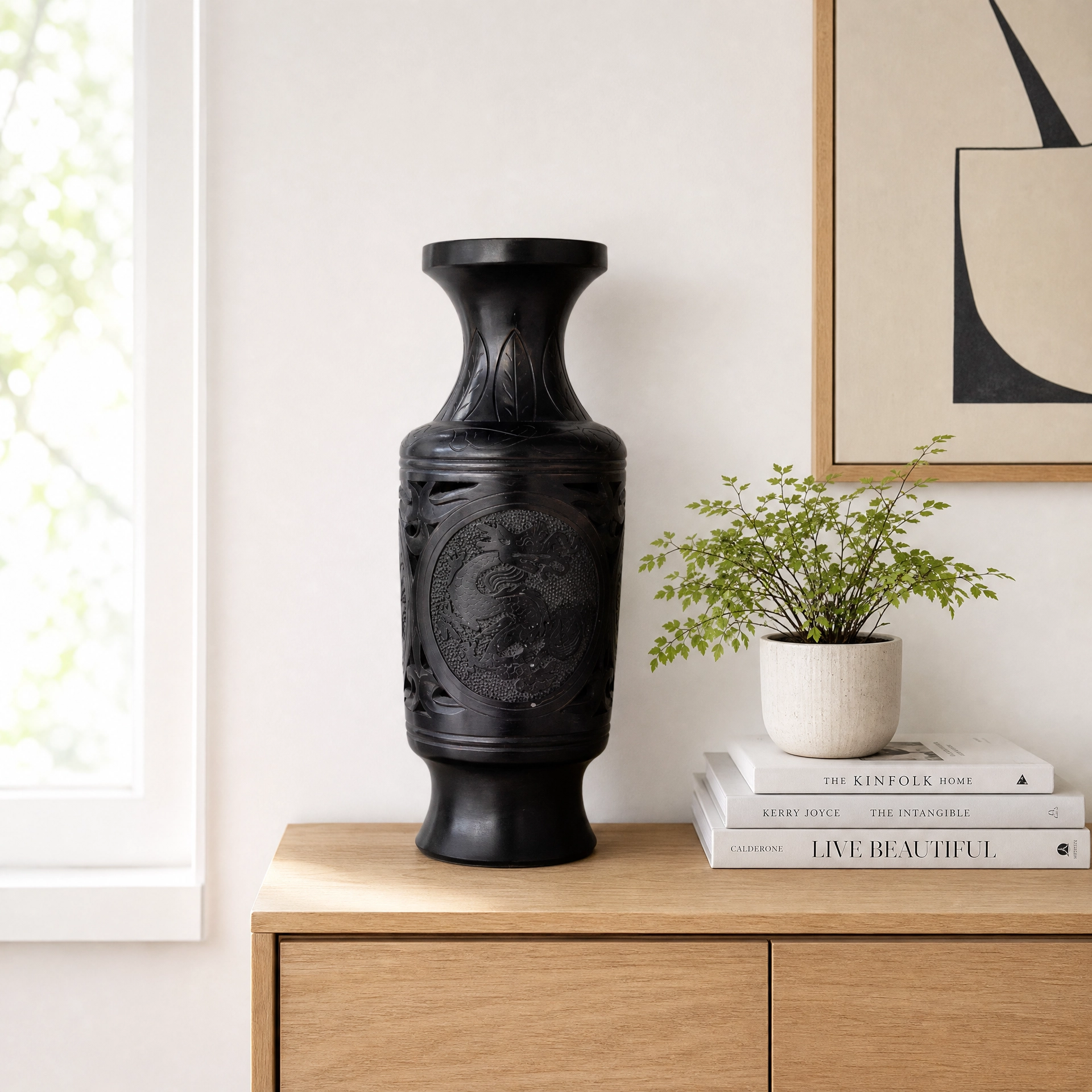
- Hand-Carving: Before the clay dries, master craftsmen use delicate tools to etch intricate motifs—like the Gourd (Hulu) for prosperity or the Dragon for power—into the surface.
- The Smoke Infusion: During the final stages of firing, the kiln is sealed, and organic materials are added to create a carbon-rich smoke. This smoke permeates the porous clay, turning it permanently black from the inside out.
The Modern Renaissance: Black Pottery in Contemporary Design
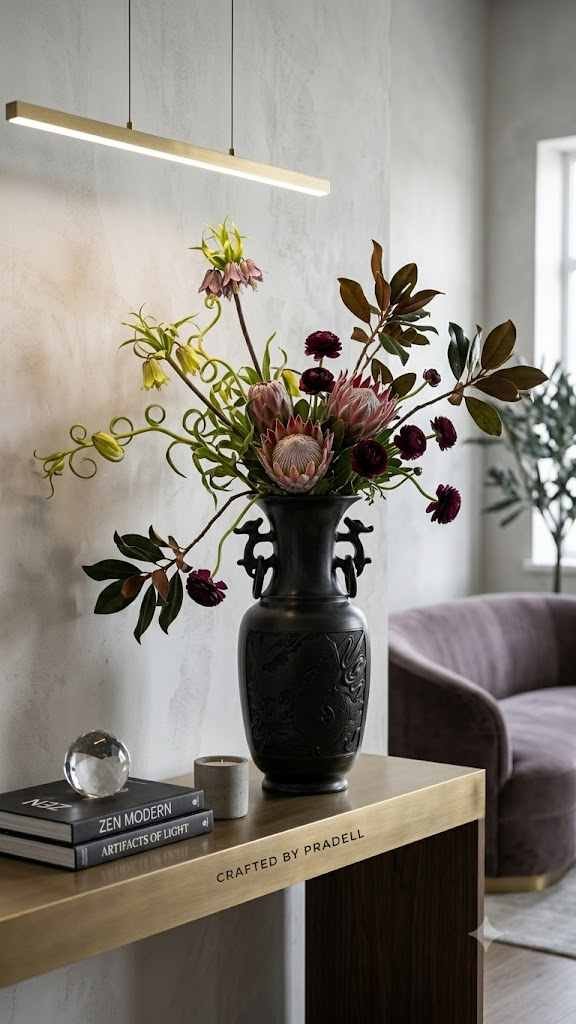
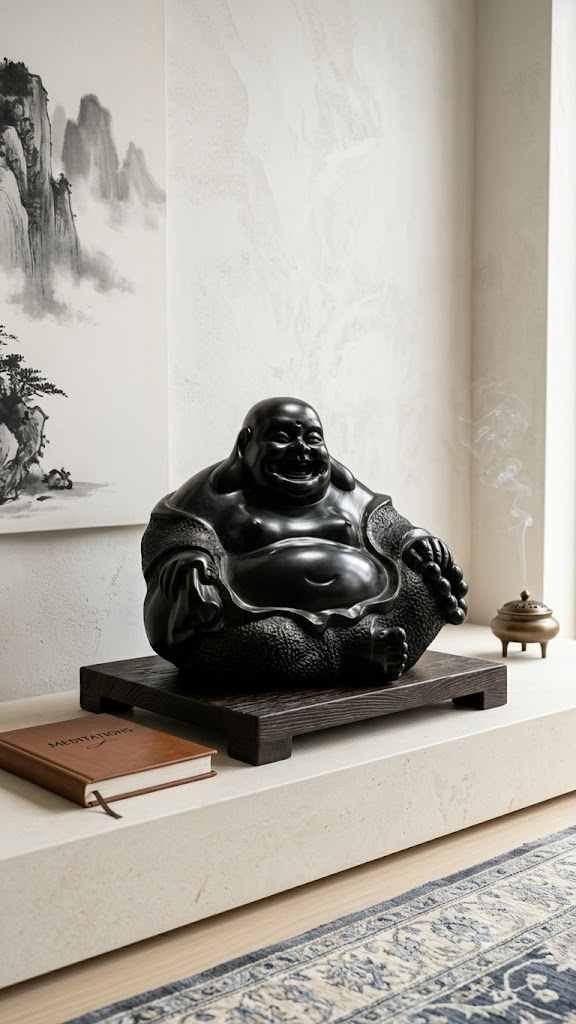
For centuries, this craft remained a hidden gem of the East. Today, it is experiencing a renaissance among interior designers and art collectors worldwide. The minimalist, matte finish of black pottery fits perfectly within Wabi-sabi, Zen, and Modern Minimalist aesthetics.
At Fradell, we bridge the gap between this 4,000-year history and your contemporary lifestyle. Our “Hundred Blessings” Gourd Collection is a perfect example: it honors the ancient silhouette of the gourd while incorporating modern artistic elements like emerald green accents and golden inscriptions.
Why Collect Black Pottery Today?
Owning a piece of black pottery is about more than decoration; it’s about mindful living.
- A Connection to History: You are preserving a craft that has survived millennia.
- Unique Artistry: Because each piece is hand-carved, no two vessels are identical. You own a one-of-a-kind masterpiece.
- Positive Energy: Symbols like the Gourd and the “Fu” (Blessing) character are believed to bring harmony and abundance to your space.
Conclusion: An Heirloom for the Future
As you place a black pottery vessel on your mantle or desk, you aren’t just adding a decorative accent. You are inviting a 4,000-year-old story into your home. It is a piece of the earth, refined by fire, and perfected by the human hand.
Explore the Fradell Collection today and find the piece that speaks to your soul.
Frequently Asked Questions (FAQ)
1. Is Chinese Black Pottery fragile?
While black pottery is made of natural clay, the high-temperature carbonization process makes it quite durable and solid. However, like all fine ceramics and handcrafted art, it should be handled with care. We recommend placing it on a stable surface away from high-traffic edges to preserve its intricate carvings for generations.
2. Why is the pottery black if it’s not glazed?
The deep “midnight” color is achieved through an ancient technique called reduction firing. During the final stage of the kiln process, smoke from organic materials is sealed inside, allowing carbon to permeate the clay itself. This creates a permanent, internal black hue that won’t fade or peel like paint or glaze.
3. How do I clean and maintain my black pottery piece?
To preserve the matte finish and delicate carvings, simply use a soft, dry cloth or a fine-bristled brush to remove dust. Avoid using water, harsh chemicals, or abrasive cleaners, as these can alter the natural texture of the unglazed clay.
4. What is the symbolic meaning of the Gourd (Hulu) in Zen decor?
In Eastern philosophy, the gourd is a powerful symbol of “Fu Lu” (Prosperity and Wealth). Its unique shape represents a vessel that captures and stores positive energy (Qi). In modern Zen decor, it serves as a “silent guardian” that brings balance, harmony, and a sense of abundance to the home.
5. Can I use these vases to hold water and fresh flowers?
Traditional black pottery is often unglazed and slightly porous to maintain its authentic matte texture. While it is perfect for dried flowers, branches, or as a standalone art piece, we do not recommend filling it directly with water. If you wish to use fresh flowers, we suggest placing a small glass or plastic liner inside the vessel.