Black Pottery Significance: History, Symbolism, and Modern Value
Few materials carry as much quiet weight as black pottery. To understand black pottery significance, you need to look at three things: where it came from, what it symbolized, and why it still matters in homes and collections today. Long before porcelain painted with blue and white patterns became the face of Chinese ceramics abroad, black pottery held a place of ritual importance and technical achievement that still resonates now.
The Origins Behind Black Pottery Significance
The story begins in the Neolithic period, most closely associated with the Longshan culture (c. 3000–1900 BCE) in what is now Shandong Province, China. Longshan potters achieved something remarkable for their time: thin-walled, wheel-thrown vessels with a lustrous, almost metallic black surface, produced without any painted decoration at all. The color and shine came entirely from the firing process itself — a smoke-firing method that reduced oxygen during the final stage of firing.
This wasn’t decorative pottery in the everyday sense. Many surviving pieces were made for ritual use, and some Longshan settlements were protected by massive earthen walls, suggesting these communities placed real value — spiritual and social — on the objects they produced. The eggshell-thin black pottery cups found at Longshan sites remain some of the most technically advanced ceramics of the ancient world, a full millennium before comparable wheel-thrown precision appeared elsewhere. This origin story is central to any discussion of black pottery significance, because it shows the tradition was rooted in skill and ritual from the very beginning.
What Black Pottery Symbolizes
Across cultures, black in ceramics has rarely been just a color choice. In the Chinese context, the deep, unpainted black of Longshan and later wares reflected values that ran through classical aesthetics more broadly: restraint over ornamentation, substance over surface decoration, and a quiet authority that didn’t need embellishment to make its presence felt.
This is part of why black pottery significance is often described in terms of three qualities:
- Strength and permanence — the density and durability of the fired clay itself
- Mystery and depth — a surface that reveals subtle variation only in changing light
- Discipline and mastery — achieving a true, even black glaze or burnish demands exceptional control of materials and fire, so errors are far harder to hide than on painted or glazed surfaces
Later Chinese ceramic traditions carried this same appreciation forward. Song dynasty black-glazed wares, prized for their role in tea culture, were valued precisely because their dark surface created a striking contrast against pale tea foam — beauty found in subtlety rather than decoration.
Craftsmanship: Why Black Pottery Is Harder to Make Than It Looks
Modern audiences sometimes assume black pottery is simple because it lacks painted design. In practice, the opposite is true. Without decoration to distract the eye, every imperfection in form, surface, or firing becomes visible. Achieving a uniform black tone — whether through smoke-reduction firing in the Longshan tradition or iron-rich glazes developed in later dynasties — requires exact control over:
- Clay composition and iron content
- Kiln temperature and airflow
- Timing of the reduction (oxygen-starved) firing phase
This is one reason black pottery has endured as a marker of technical skill among collectors and artisans alike. A well-made piece communicates mastery through what isn’t there as much as what is — which is a large part of black pottery significance for anyone who studies ceramic craftsmanship closely.
The Modern Significance of Black Pottery
Black pottery significance hasn’t faded with time — if anything, it has found new audiences for reasons that echo its original appeal.
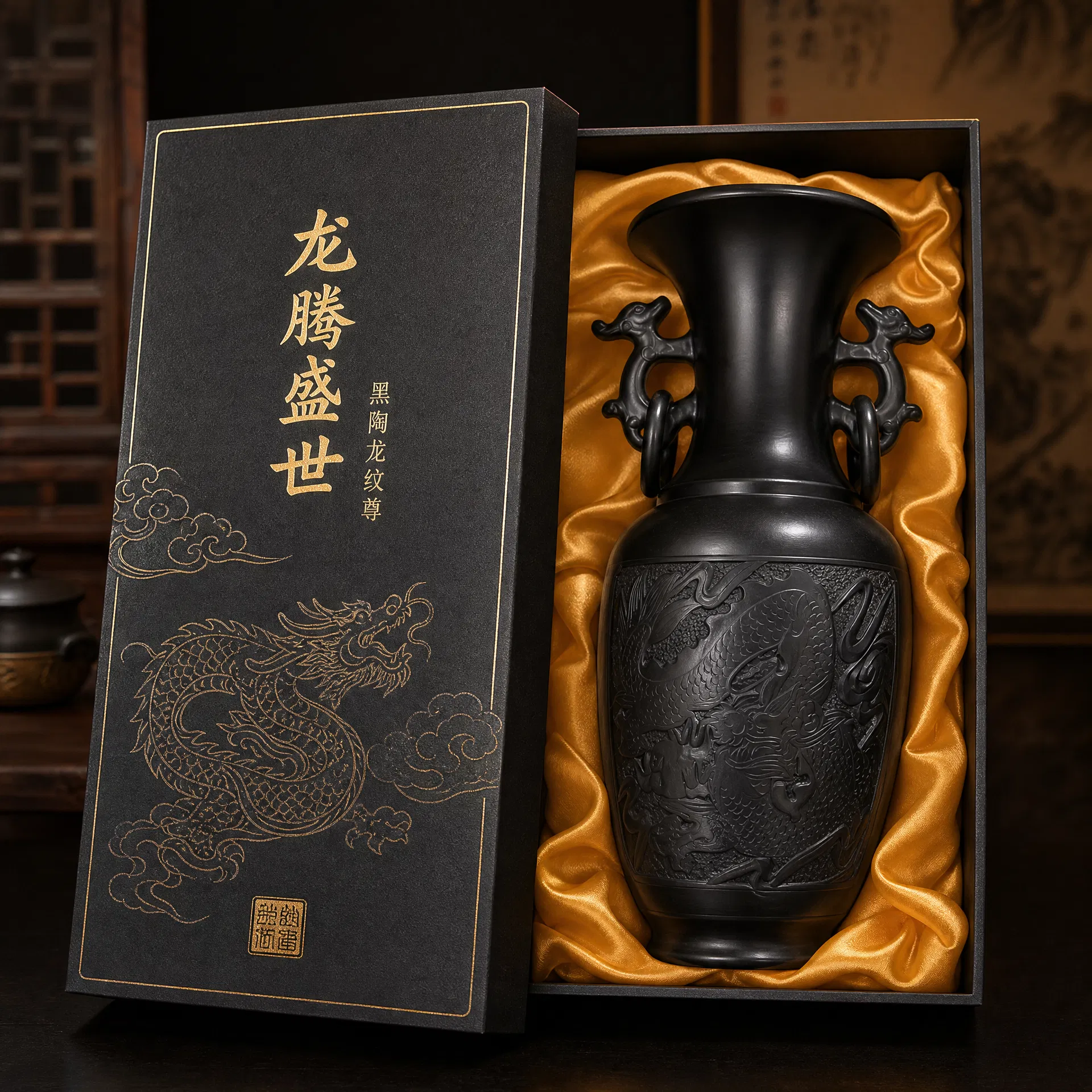
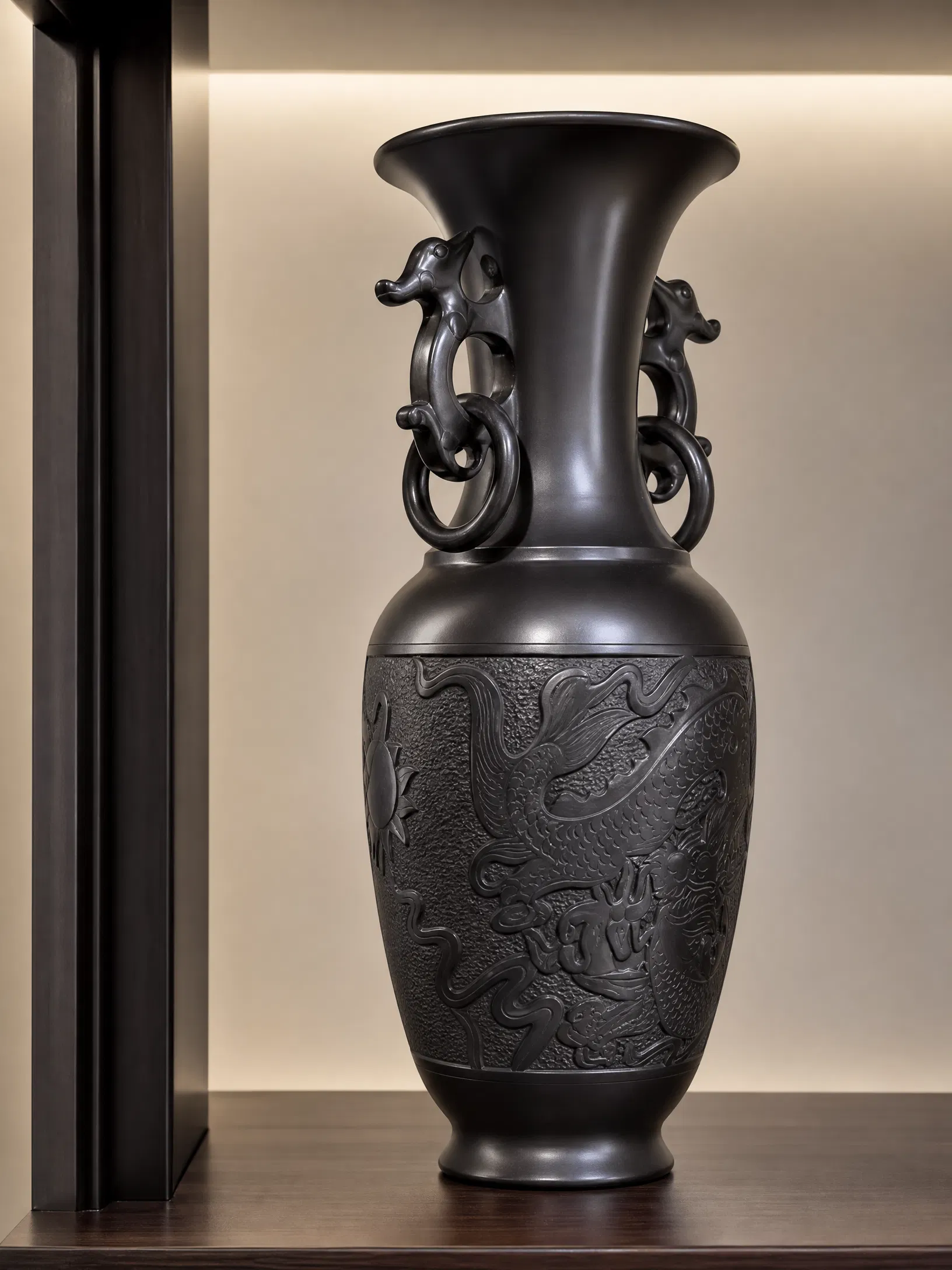
In home decor, black pottery pairs naturally with the minimalist, neutral-toned interiors that have become popular in recent years. A single black vase or bowl reads as a deliberate statement piece rather than clutter, precisely because its power comes from form and surface rather than pattern.
In cultural appreciation, owning or displaying black pottery connects a space to a much longer lineage of craftsmanship — one that predates most other ceramic traditions still practiced today. For collectors interested in Chinese art and history, black pottery represents a link back to some of the earliest sophisticated pottery-making in the world.
In sustainability-conscious buying, traditional black pottery techniques often rely on hand-forming and natural firing processes rather than heavy industrial methods, appealing to buyers who value handcrafted, long-lasting objects over mass production.
Why Black Pottery Significance Still Resonates Today
What makes black pottery genuinely significant isn’t just its age — it’s that the same qualities admired five thousand years ago at Longshan sites are the same qualities people respond to now: honest material, exacting craftsmanship, and a kind of visual quiet that holds its own in any setting. Whether displayed as a museum-quality antique or a contemporary handmade piece, black pottery carries forward a design language that has never needed updating — which is, in the end, the clearest evidence of black pottery significance across thousands of years.
Interested in authentic black pottery pieces inspired by these traditions? [Explore our collection] to find handcrafted works that carry this history forward.