Black Pottery and the Wabi-Sabi Philosophy: Why Imperfection Creates Timeless Beauty
Modern life often teaches us to pursue flawless surfaces, perfect symmetry, and complete control over every detail. Yet some of the most meaningful objects in our homes tell a very different story. They carry traces of the hand that shaped them, subtle variations created by fire, and surfaces that become more beautiful with time rather than less.
This way of seeing beauty lies at the heart of the Japanese philosophy known as Wabi-Sabi.
Although Wabi-Sabi developed in Japan and black pottery has much older roots in China, the two share a surprisingly deep connection. Both value simplicity over excess, authenticity over perfection, and the quiet character that emerges through natural materials and human craftsmanship.
For this reason, black pottery feels remarkably at home in Wabi-Sabi interiors, tea rooms, and contemporary minimalist spaces around the world.
What Is Wabi-Sabi?
Wabi-Sabi is often translated as “the beauty of imperfection,” but the idea goes much deeper than that.
It encourages an appreciation for objects that are incomplete, asymmetrical, weathered, or marked by time. Rather than hiding signs of age or irregularity, Wabi-Sabi invites us to see these qualities as evidence of life and authenticity.
A hand-carved wooden table, a linen cloth softened by years of use, or a ceramic bowl with subtle variations in texture all embody this philosophy.
The appeal comes not from perfection but from presence.
Objects created through natural materials and human hands possess a quiet honesty that machine-made products often struggle to achieve.
Why Black Pottery Feels Naturally Wabi-Sabi
Traditional black pottery possesses many of the qualities that Wabi-Sabi celebrates.
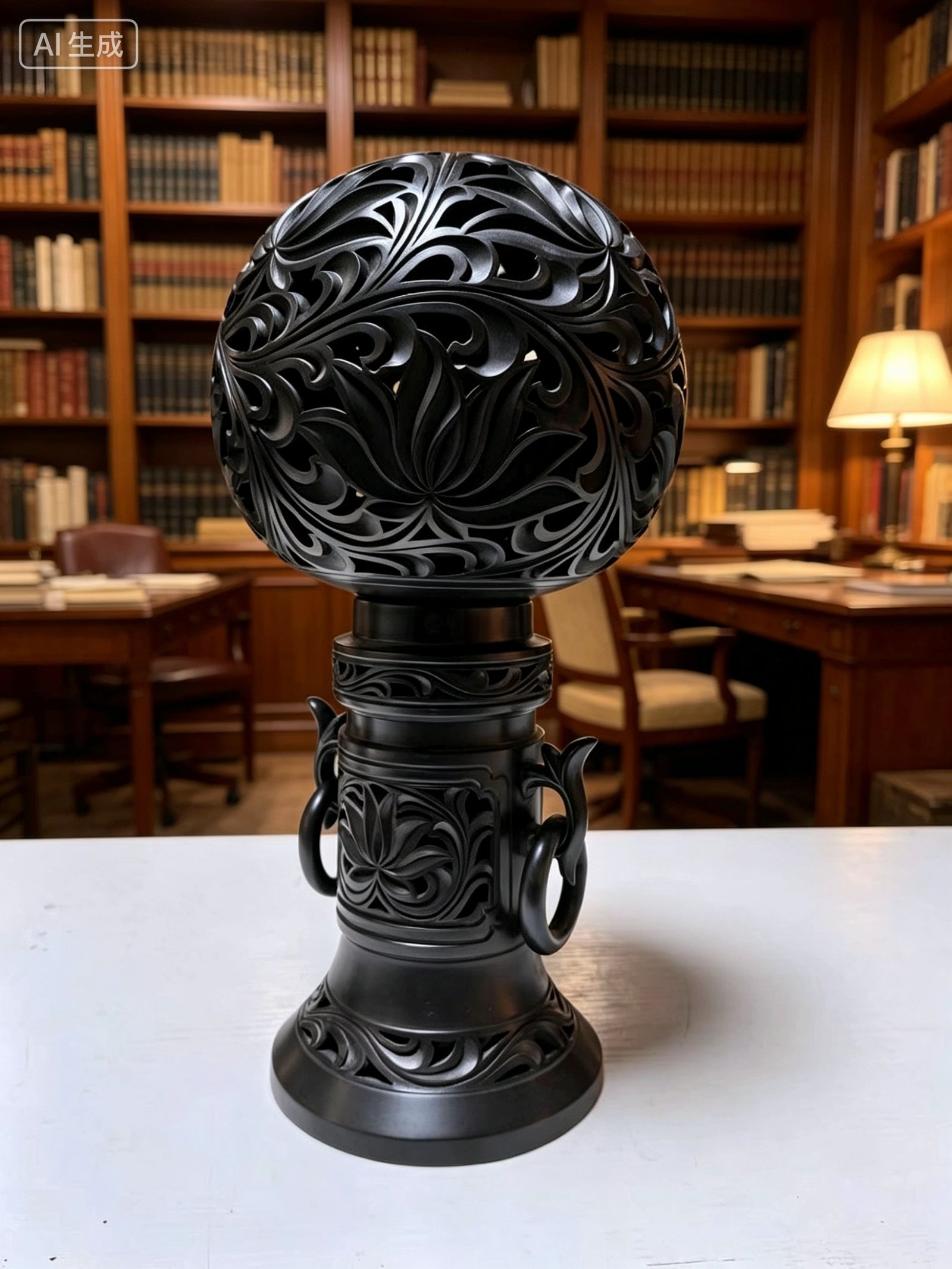
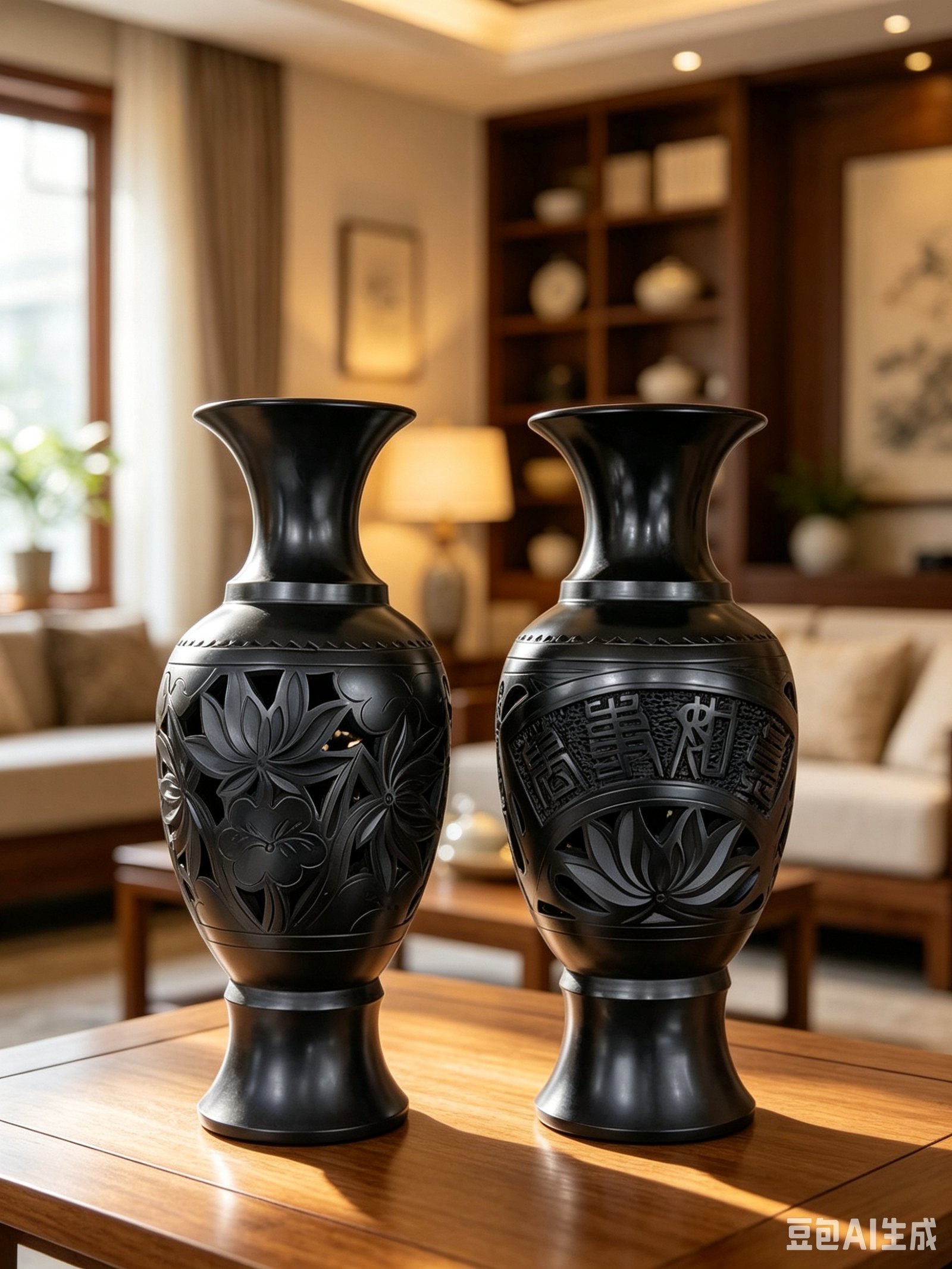
Its surfaces are rarely identical. The firing process produces slight variations in tone, texture, and sheen. One vase may reveal a soft charcoal finish while another develops a subtle metallic glow. These changes are not manufacturing defects but natural results of fire, clay, temperature, and atmosphere inside the kiln.
Every piece becomes unique.
This individuality creates emotional value because the object cannot simply be replaced by another identical copy. Collectors often describe this feeling as owning a piece with character rather than merely owning a product.
If you are drawn to this kind of handmade character, you can explore our Black Pottery Collection to discover pieces shaped by traditional craftsmanship and quiet natural beauty.
The Beauty Created by Fire
Unlike industrial ceramics that aim for complete consistency, traditional black pottery embraces the unpredictable relationship between clay and fire.
During firing, carbon and smoke interact with the ceramic body to create the deep black surfaces that define the craft. Minor changes in temperature or airflow may influence the final appearance.
The result is a material that feels alive.
Under morning light the surface may appear soft and matte. Under evening light it can reveal richer tones and unexpected reflections. These small changes encourage slow observation, which is itself a central part of Wabi-Sabi thinking.
Handmade Objects Carry Human Presence
One reason many people are drawn to handmade pottery is that it preserves evidence of the person who made it.
A slight asymmetry in the rim. A subtle variation in thickness. Tool marks left during shaping.
These details remind us that craftsmanship is a conversation between the maker and the material rather than a process of industrial repetition.
In a world increasingly dominated by identical products, this sense of individuality becomes increasingly valuable. The object feels connected to a person rather than a factory.
Simplicity Creates Space for Meaning
Many black pottery pieces avoid elaborate decoration.
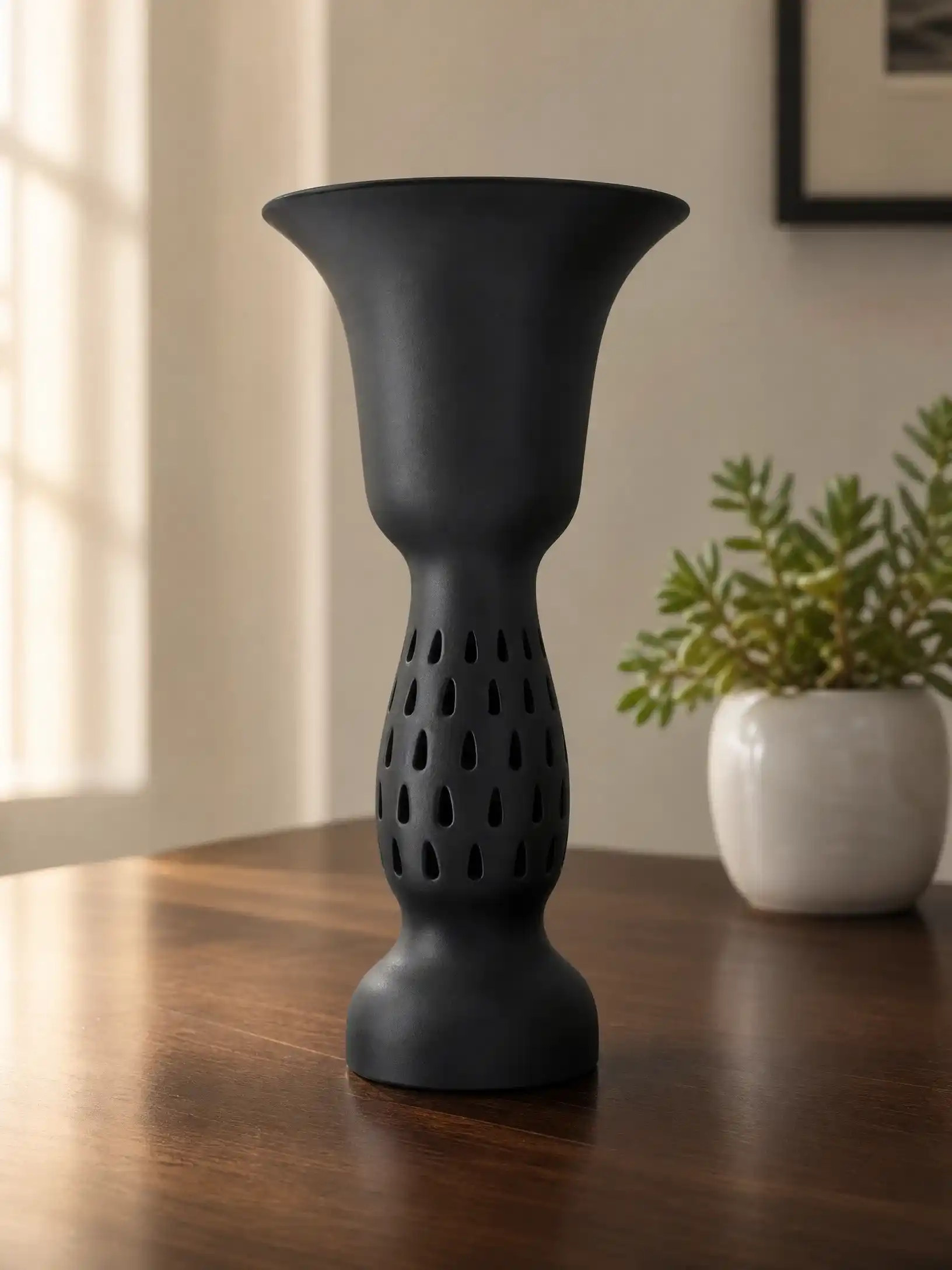
Their beauty comes from silhouette, texture, balance, and proportion. This restraint reflects another important aspect of Wabi-Sabi: simplicity.
When unnecessary details are removed, attention naturally shifts toward material, form, and atmosphere.
A single black pottery vase placed on a wooden table may create more emotional impact than an entire shelf of decorative objects competing for attention.
The power lies in what is left unsaid.
Black Pottery in Contemporary Interiors
The growing popularity of minimalist interiors, Japandi design, and natural materials has introduced black pottery to a new generation of homeowners.
Its muted color palette pairs naturally with wood, stone, linen, raw concrete, soft lighting, and neutral fabrics.
Black pottery works particularly well in tea rooms, reading corners, entryways, living room consoles, minimalist apartments, and boutique hospitality spaces.
For practical styling ideas, see our guide on Decorating with Handmade Black Pottery.
Because it avoids trends and excessive ornamentation, black pottery rarely feels outdated. Instead, it becomes part of the atmosphere of the room itself.
You can also read Black Pottery in Modern Interior Design for more inspiration on incorporating black ceramic pieces into contemporary homes.
The Difference Between Perfection and Character
Mass production has taught us to associate value with precision.
Yet many collectors discover that the objects they keep longest are often those with the most personality.
The slightly uneven bowl used every morning. The handmade vase that changes appearance with the seasons. The ceramic surface that becomes familiar over years of daily life.
These objects become meaningful because they participate in our lives rather than simply decorating them.
Black pottery belongs firmly in this category.
A Shared Appreciation Across Cultures
While Chinese black pottery and Japanese Wabi-Sabi emerged from different historical traditions, they ultimately arrive at similar conclusions.
Beauty does not require perfection.
Craftsmanship is more meaningful than uniformity.
Time adds value rather than removing it.
Natural materials possess their own quiet wisdom.
These ideas explain why black pottery continues to resonate with contemporary audiences despite being rooted in traditions that stretch back thousands of years.
Final Thoughts
Perhaps the enduring appeal of black pottery comes from the fact that it reminds us of something modern life often encourages us to forget.
Perfection is not always beautiful.
Sometimes beauty is found in texture, variation, restraint, and the marks left behind by human hands.
This is the lesson shared by both black pottery and Wabi-Sabi.
Neither asks us to admire perfection. Instead, they invite us to slow down long enough to appreciate authenticity.