
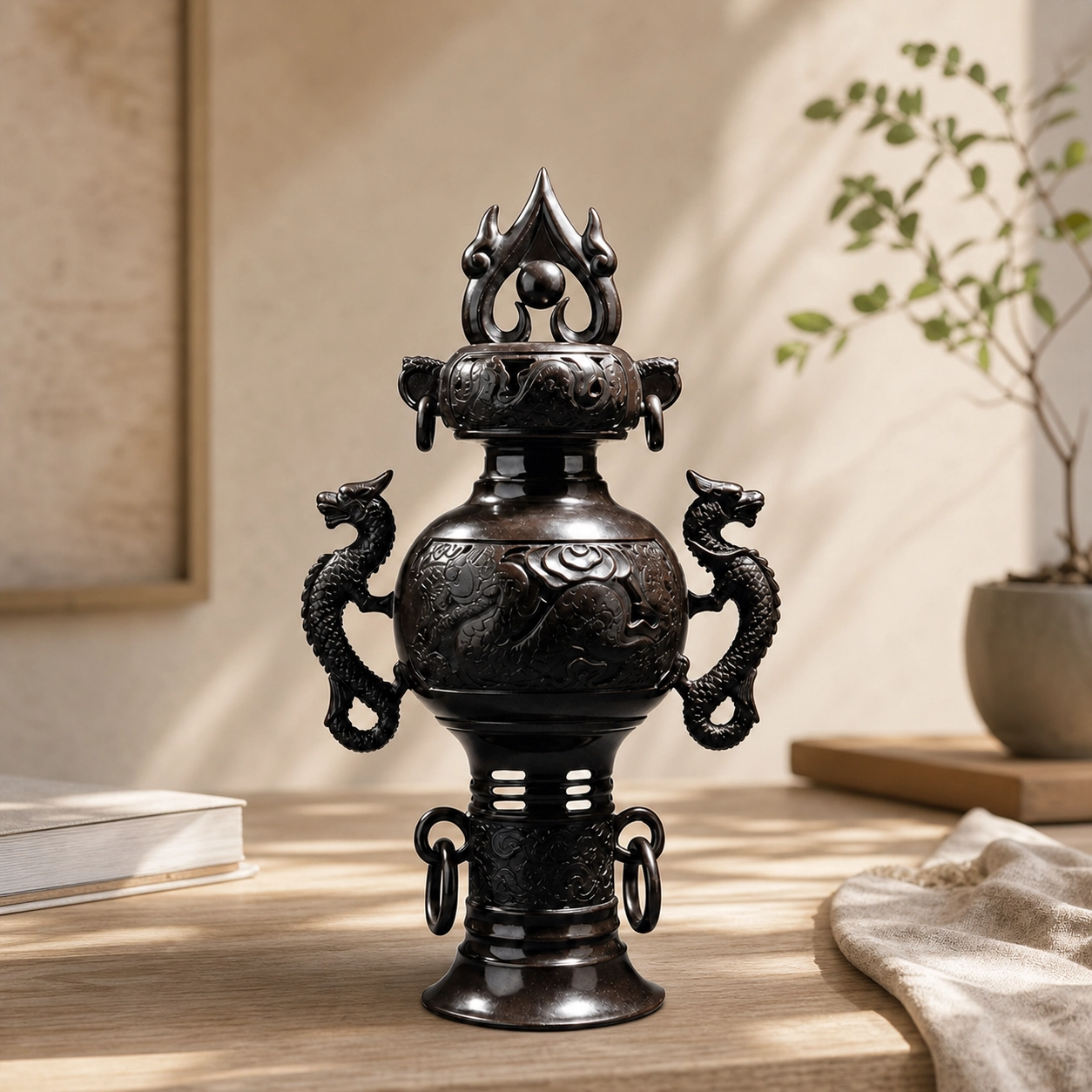
Walk into a pottery gallery and you may find countless ceramic works displayed side by side. Some are brightly glazed, others are richly decorated with intricate patterns. Yet among them, black pottery often stands apart through its quiet presence.
Without relying on vivid colors or elaborate ornamentation, black pottery possesses a distinctive character that has fascinated artisans, collectors, and historians for centuries.
So what exactly makes black pottery different from other ceramics?
A Color Created by Fire
The most obvious difference is its appearance.
Unlike many ceramic traditions that achieve color through glaze, traditional black pottery derives its deep black surface from the firing process itself.
During firing, artisans carefully reduce the oxygen inside the kiln. As smoke and carbon interact with the clay body, the vessel gradually develops its characteristic black coloration.
The result is not merely a surface coating but a color that becomes part of the pottery itself.
This technique requires patience, experience, and a deep understanding of the relationship between clay, fire, and air.
Simplicity Instead of Decoration
Many ceramic traditions emphasize painted motifs, colorful glazes, or complex surface decoration.
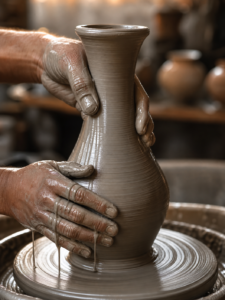
Its beauty comes from form rather than ornament.
A well-crafted black pottery vessel may contain no decorative pattern at all. Instead, attention is focused on proportion, balance, texture, and silhouette.
This restraint allows the natural qualities of the material to become the center of attention.
Every Piece Is Unique
No two handmade black pottery pieces are ever completely identical.
Variations in clay composition, hand-forming techniques, and kiln conditions create subtle differences in texture and tone.
Collectors often value these variations because they reveal evidence of human craftsmanship.
Rather than viewing these differences as flaws, they are appreciated as part of each object’s individual character.
In an era dominated by mass production, this uniqueness has become increasingly meaningful.
A Connection to Ancient Traditions
Black pottery also differs from many contemporary ceramics because of its historical roots.
Some of the earliest examples can be traced back thousands of years to ancient Chinese civilizations, where artisans developed remarkably sophisticated pottery techniques.
These traditions continue to influence modern makers today.
When holding a handmade black pottery vessel, one is often holding a craft that carries centuries of accumulated knowledge and cultural memory.
Why Designers Love Black Pottery
Modern interior designers frequently use black pottery because of its versatility.
Its neutral color complements both traditional and contemporary spaces. Whether displayed in a minimalist apartment, a tea room, or a modern office, black pottery introduces texture and depth without overwhelming its surroundings.
Its understated elegance allows it to function as both 
More Than a Ceramic Object
Perhaps the greatest difference between black pottery and other ceramics is the experience it offers.
Black pottery invites closer observation.
Its subtle textures reveal themselves gradually. Its surface changes under different lighting conditions. Its imperfections encourage appreciation rather than criticism.
The longer one lives with a piece of black pottery, the more its character becomes apparent.
This quiet relationship between object and observer is one of the reasons black pottery continues to endure across generations.
Conclusion
Black pottery stands apart not because it demands attention, but because it rewards attention.
Through its unique firing process, natural appearance, handcrafted individuality, and deep cultural heritage, black pottery offers something increasingly rare in the modern world: authenticity.
It reminds us that true beauty is often found not in excess, but in simplicity, craftsmanship, and the enduring relationship between human hands and natural materials.
https://fradell.com/the-origins-of-black-pottery-in-ancient-china/